🌋 Earthquakes and volcanic activity
Investigating seismic patterns, changes in earthquake activity and their relationship to significant geological events.
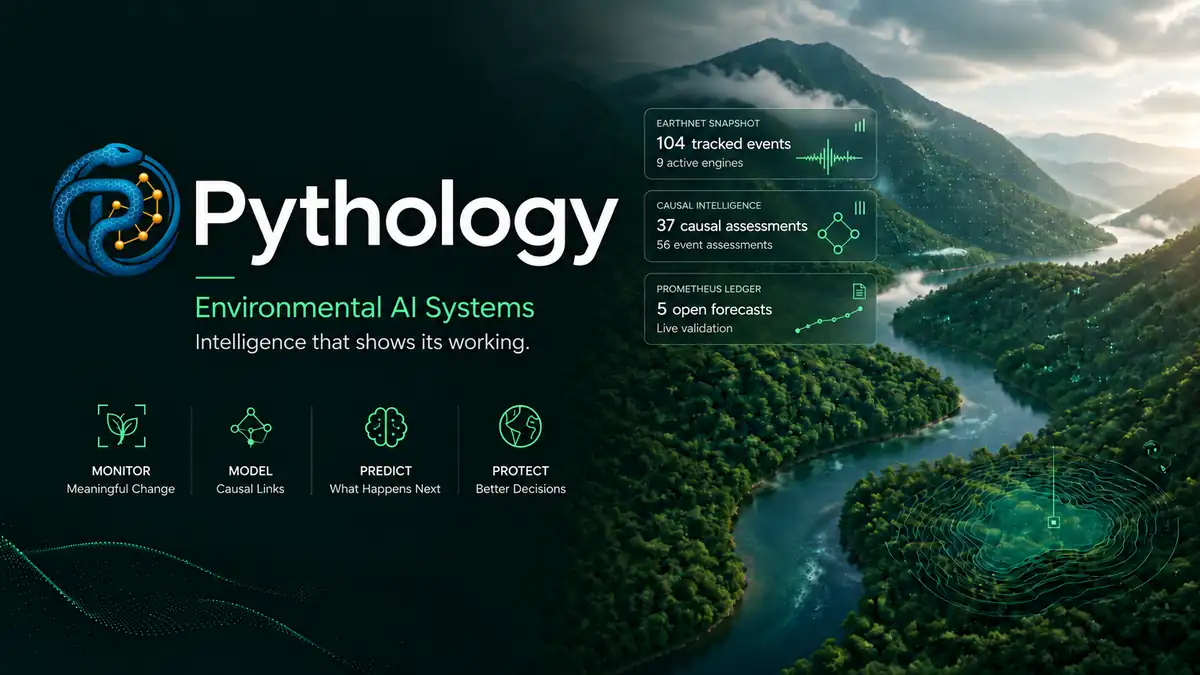
Pythology Intelligence · Manawatū, New Zealand
Don't begin with the disaster. Begin with the environment that produced it. Study how that environment changes, which combinations matter, and whether those changes tell us anything reliable about what comes next.
The natural world is constantly changing. Before a storm intensifies, during periods of seismic or volcanic unrest, and as ecosystems come under pressure, observations may contain signals worth investigating.
For organisations and research partners: Explore where our environmental monitoring, evidence-led research and tailored demonstrations could support your work. See where Pythology fits
The reason behind the research
Natural hazards can develop rapidly. Environmental damage can unfold quietly over months or years. In both cases, recognising meaningful changes sooner could create valuable time.
Time for scientists to investigate. Time for communities to prepare. Time for people to make better-informed decisions.
We cannot prevent earthquakes, volcanic eruptions or severe storms. And identifying an unusual pattern does not mean we can predict what happens next.
Our mission is to discover which early signals are genuinely useful — and help turn that understanding into earlier awareness.
PYTHOLOGY IN THE FIELD · CHATHAM ISLANDS
The work is already tangible. Helios helps make weather information accessible; Chathams EcoWatch gives environmental changes a way to be seen and reviewed.
Discover our Chathams work →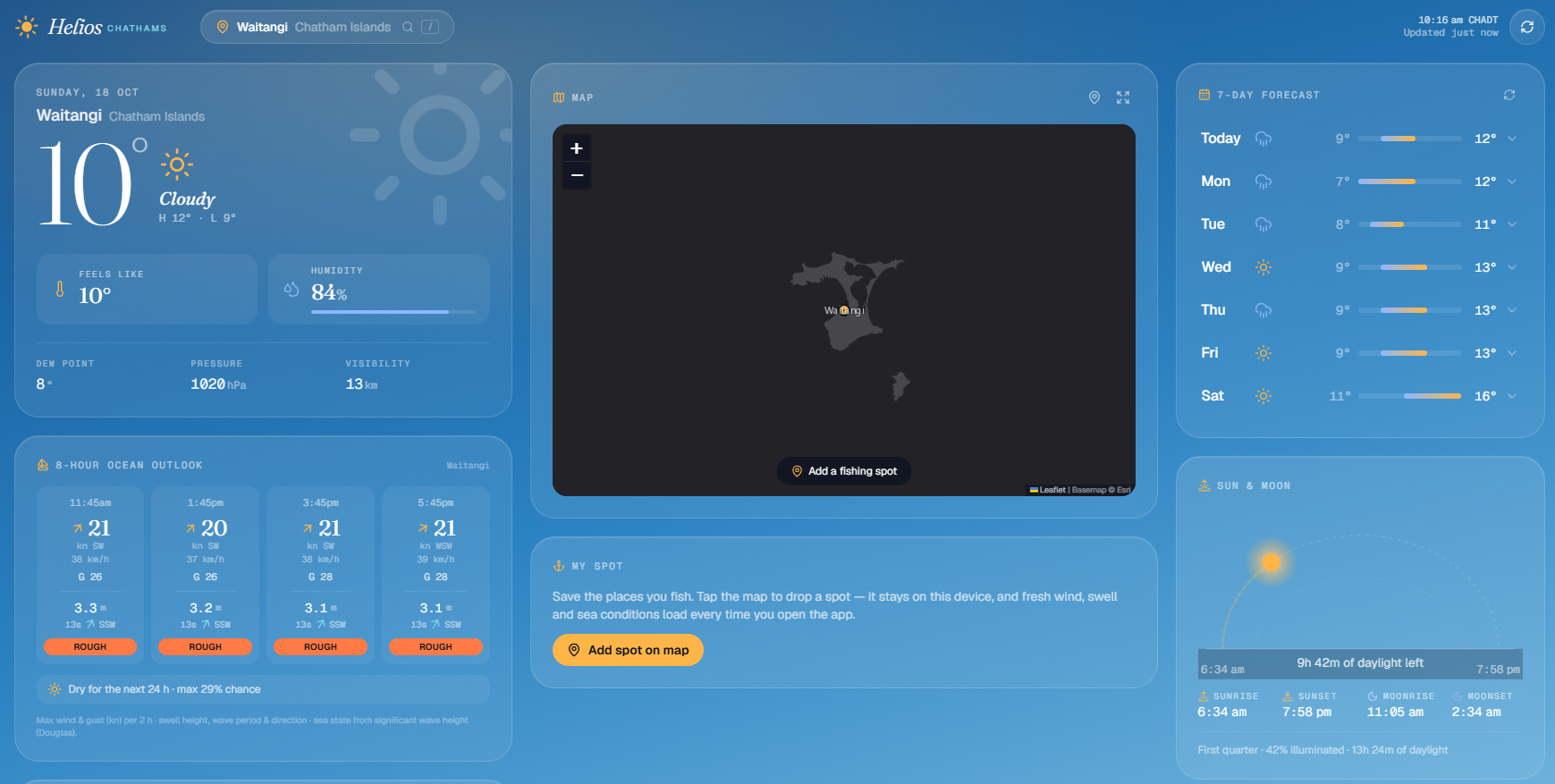
Weather context and forecasts, created to serve a remote community.
See the system →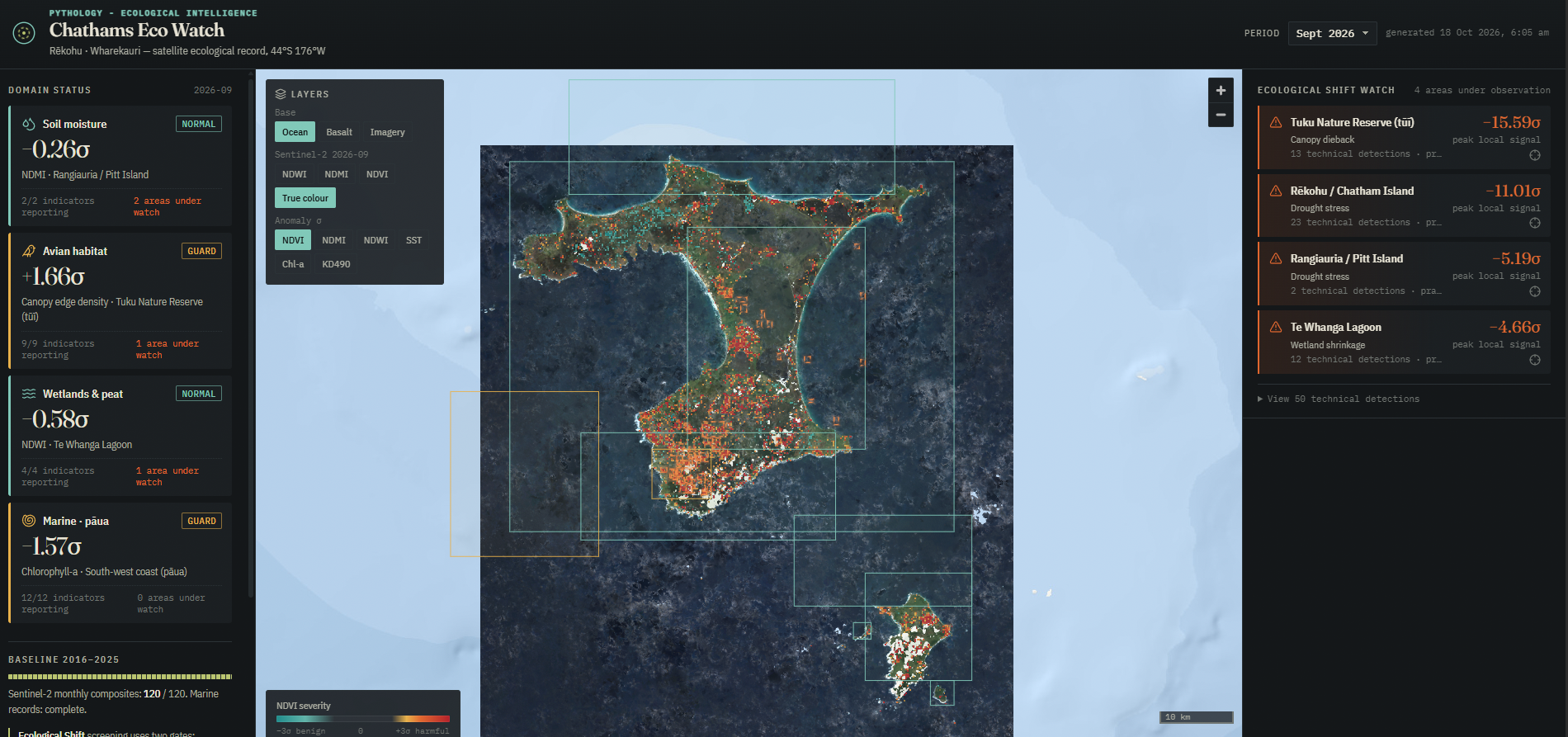
Satellite-based monitoring, environmental baselines and changes worth investigating.
See the research →Real system screenshots. Monitoring interpretations remain subject to data-quality and expert review.
Finding the signals
Investigating seismic patterns, changes in earthquake activity and their relationship to significant geological events.
Studying developing storm structures, atmospheric observations and how conditions evolve before dangerous weather.
Tracking environmental conditions over time to recognise changes that may otherwise go unnoticed.
Finding a pattern is only the beginning. We preserve the original evidence, compare it with what happens later, and record misses alongside promising results.
Meet Prometheus
Prometheus is Pythology's autonomous environmental research system. He examines incoming observations, identifies patterns worth investigating and records what he found — including where and when he found it.
When later events provide new evidence, he can compare those outcomes with his earlier observations.
His purpose isn't to declare that every anomaly predicts an event. It's to help us discover which patterns, if any, consistently provide meaningful advance information.
Live research, openly recorded
These public research cards show observations and forecasts recorded by Prometheus. They exist so you can see the evidence, timestamps, uncertainty and later outcomes — not because every anomaly means an event is coming.
Prometheus · a forecast on the record
Where a testable forecast is justified, Prometheus records it before the outcome is known and checks the result. Misses remain visible alongside promising findings.
PROMETHEUS · LIVE RESEARCH EVIDENCE
The featured forecast gate is intentionally strict. These separate research displays show what Prometheus is screening without turning every anomaly into a prediction.
Independent hourly screening of earthquake-catalogue patterns and known volcanic settings, with evidence limits kept visible.
Catalogue screening is not an earthquake or eruption prediction.
Explore geological investigations →Patterns in global environmental conditions, with separate New Zealand observational screening. These are research candidates, not weather warnings or validated predictions.
— NZ exploratory observations
Checking publication date…Research only; no validated weather forecast.
Explore atmospheric investigations →New Zealand · daily intelligence
New Zealand's daily environmental observations sit alongside retrospective research cases. Comparing what preceded an event is research, not evidence that we could have predicted it.
Loading the latest New Zealand interpretation…
A compact 24-hour national view from the latest public evidence available to EarthNet.
Loading magnitude distribution…
—
GeoNet earthquake catalogue
View official GeoNet event ↗Loading volcanic pulse…
Prometheus opens a retrospective case after a qualifying New Zealand event and compares the preceding evidence with matched non-event windows.
The reason behind the research
We're building Pythology around a simple belief: if we can better understand the signals that precede important environmental changes, we may be able to give people something invaluable.
More time. Better information. A greater opportunity to protect lives and the places we care about.
That's what drives the work.